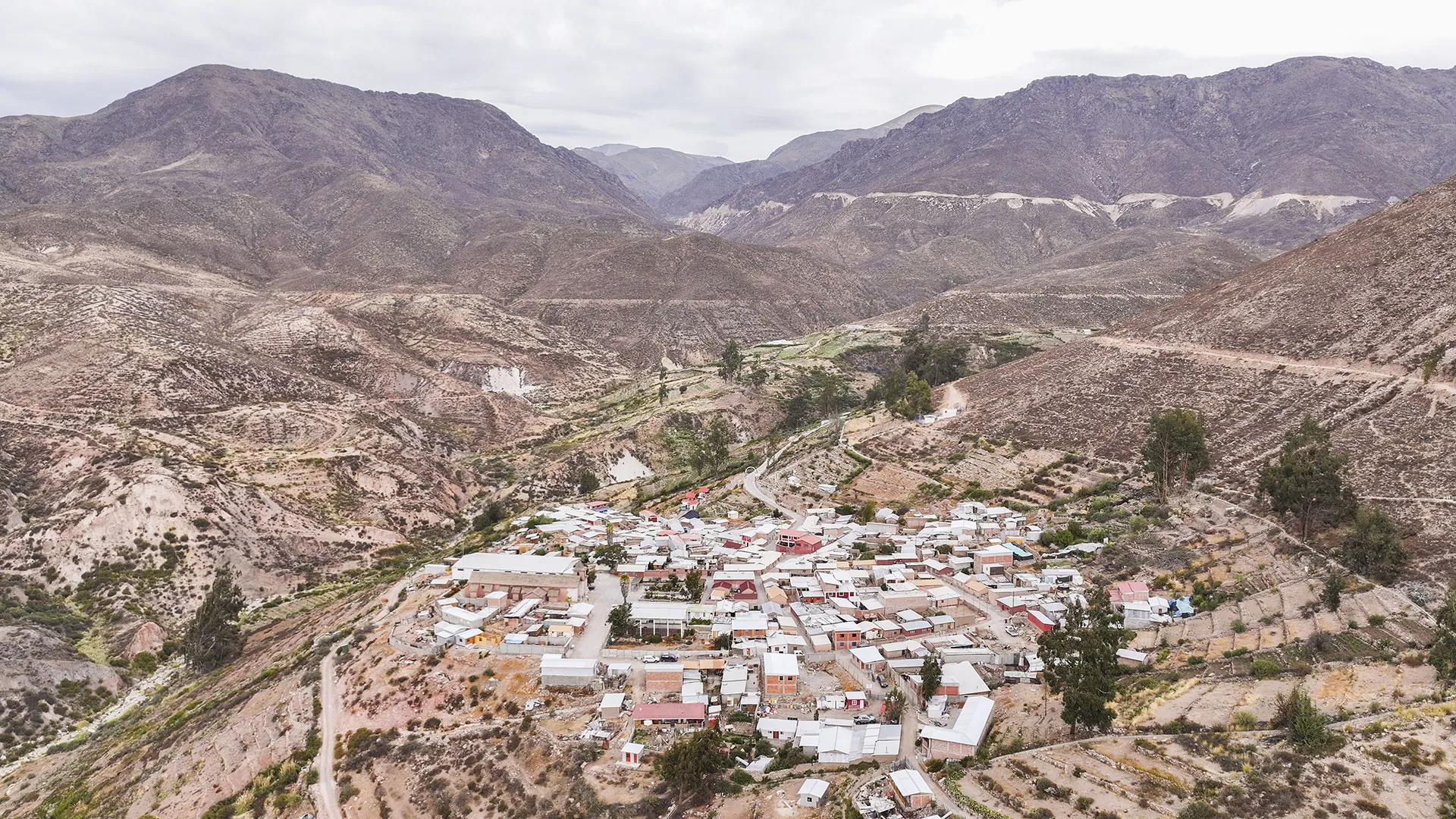
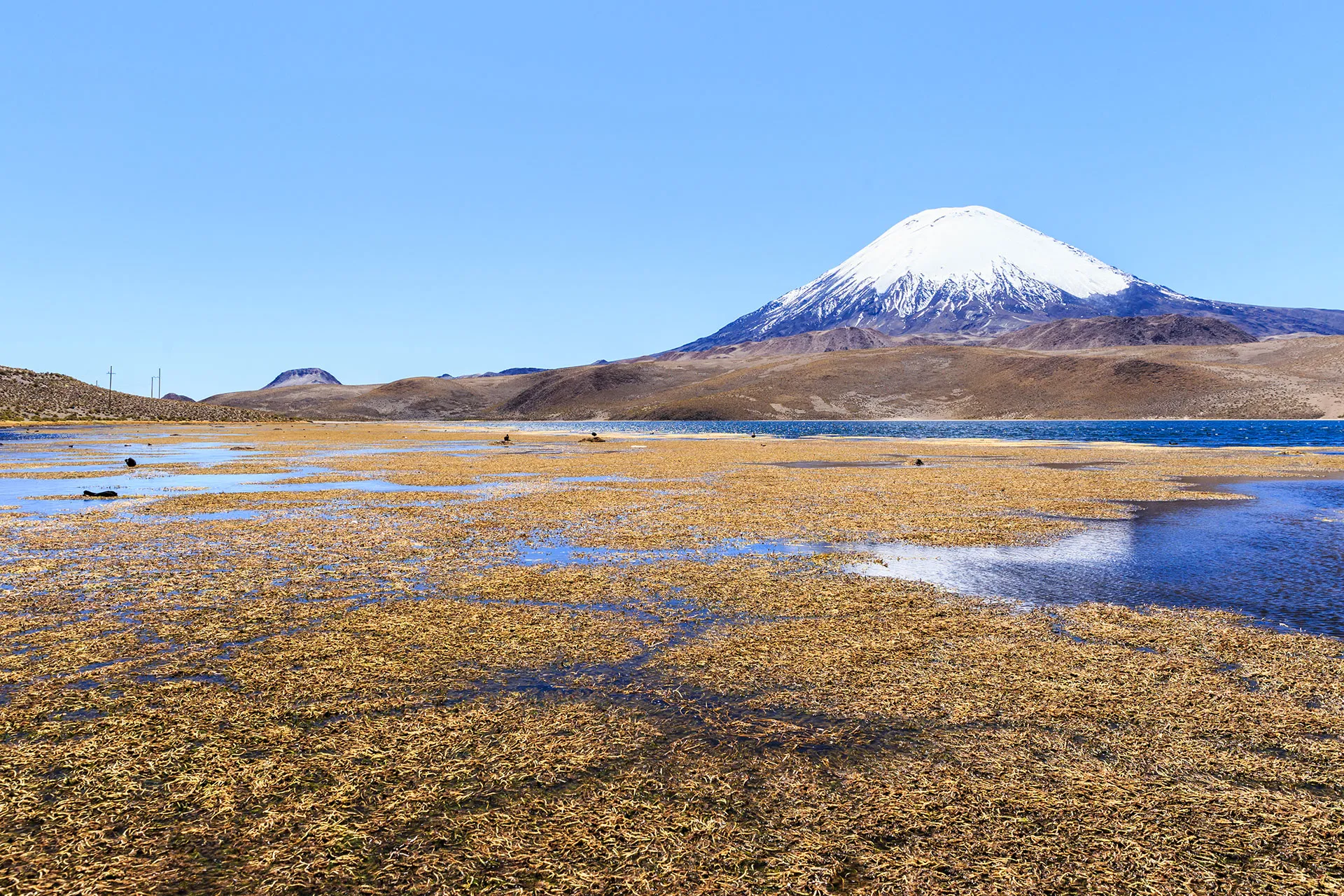
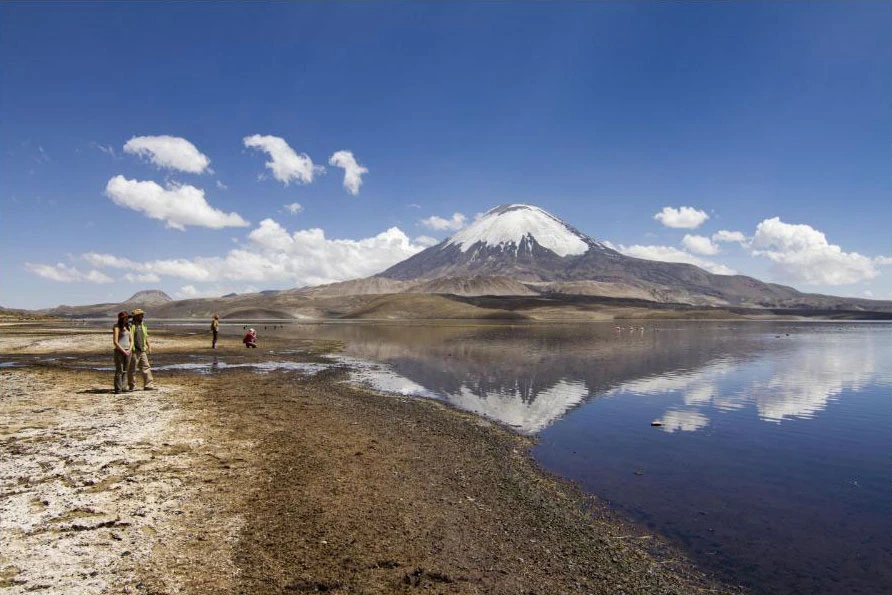
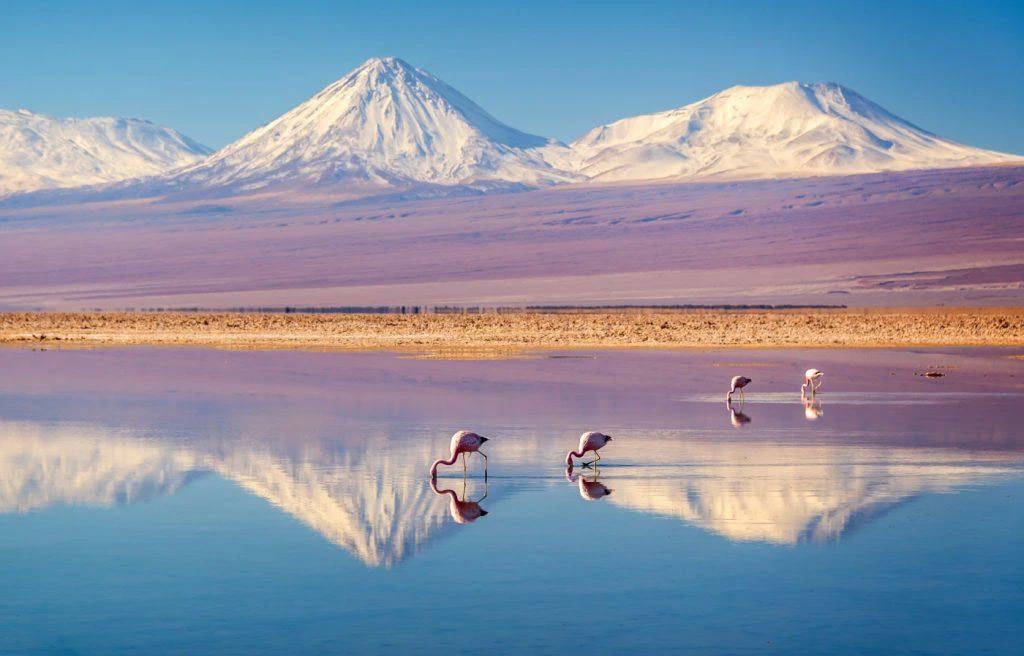
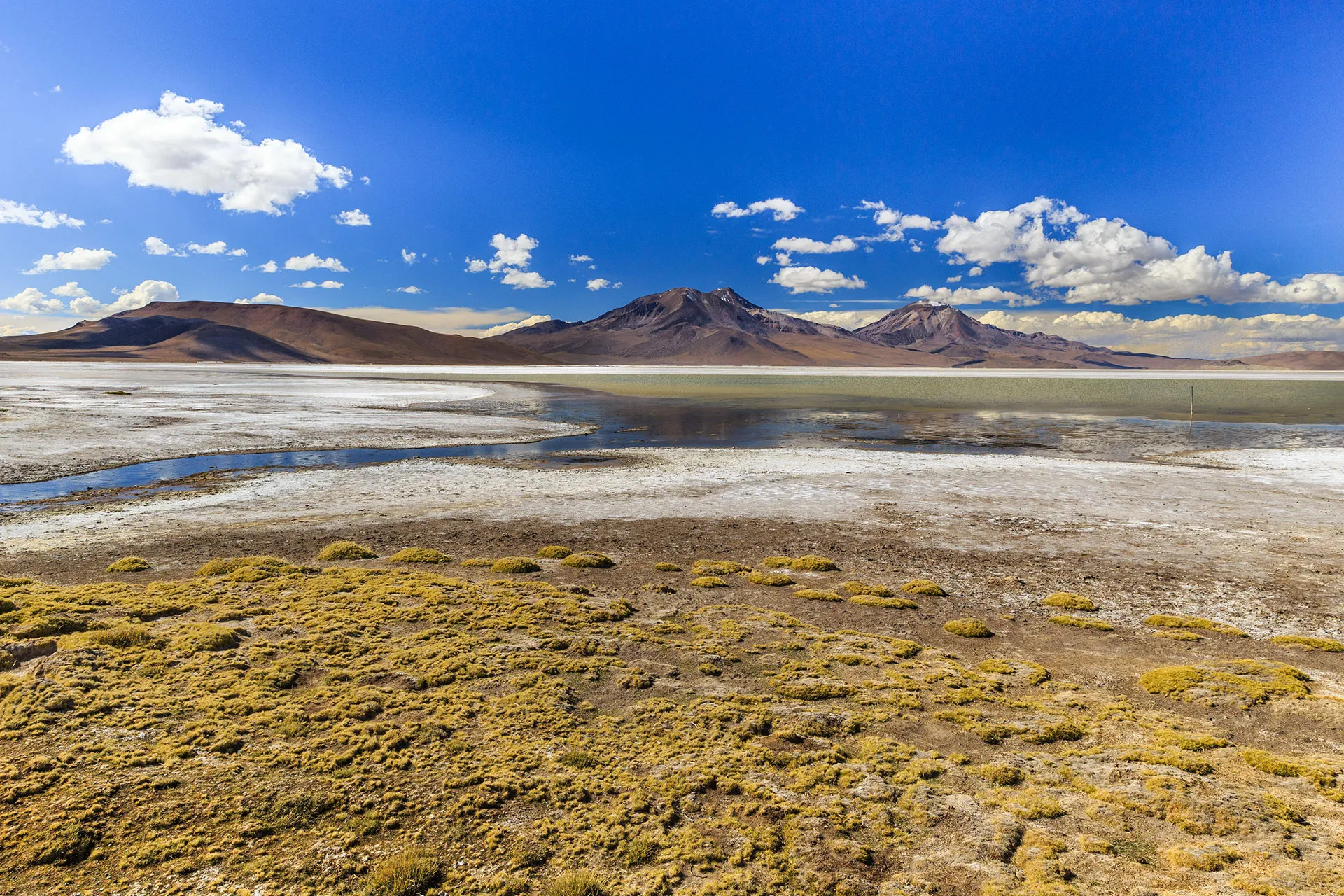
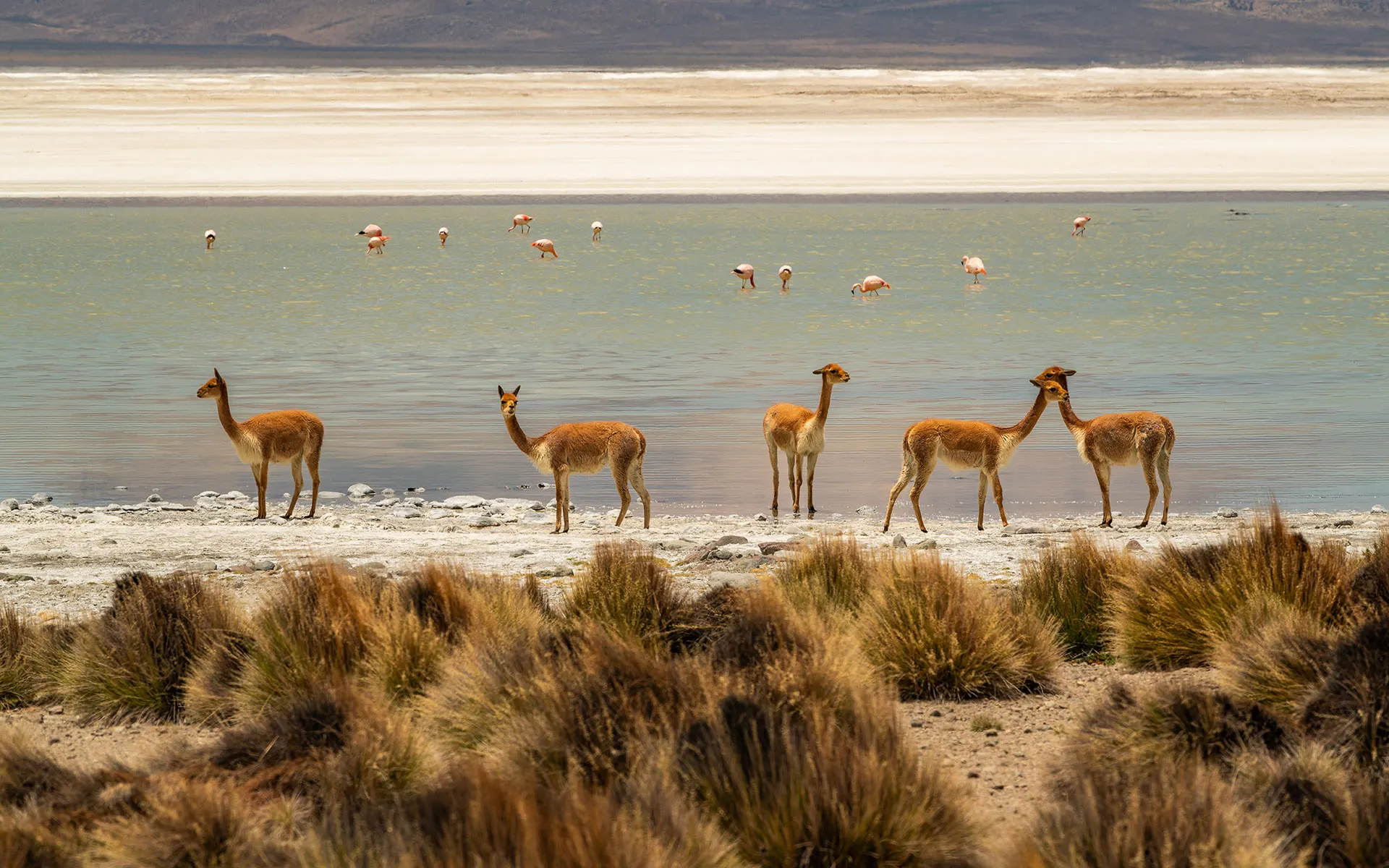
The city of eternal spring will be the beginning for this circuit where you will know the hieroglyphs of the Valley of Lluta, Rosario the church of Pconchile, the Valley of Cardoni with the famous cactus candelabros, the Pucará of Copaquilla and Socoroma, until reaching Putre at 3.500 meters above sea level, town of great importance in the past as it was an obligatory passage on the route Potosí- Arica. During the second day you will visit the Surire salt flats at an altitude of 4,245 meters, a protection zone for wildlife and the fragile highland system, as well as Aymara communities such as Ancuta, Guallatire and Viluvio, protected by the Guallatire volcano and its fumaroles. On the third day we will have the full day excursion to Lauca National Park, declared by UNESCO as a World Biosphere Reserve, which has a spectacular fauna and flora altiplano, following up to Parinacota and its famous church of Andean style, with its bell tower separated from the adobe structure, declared National Monument, to finish at Lake Chungará, the highest in the world at 4,500 meters above the sea, surrounded by the volcanoes Parinacota (6,330 m) and Pomerape (6,240 m).
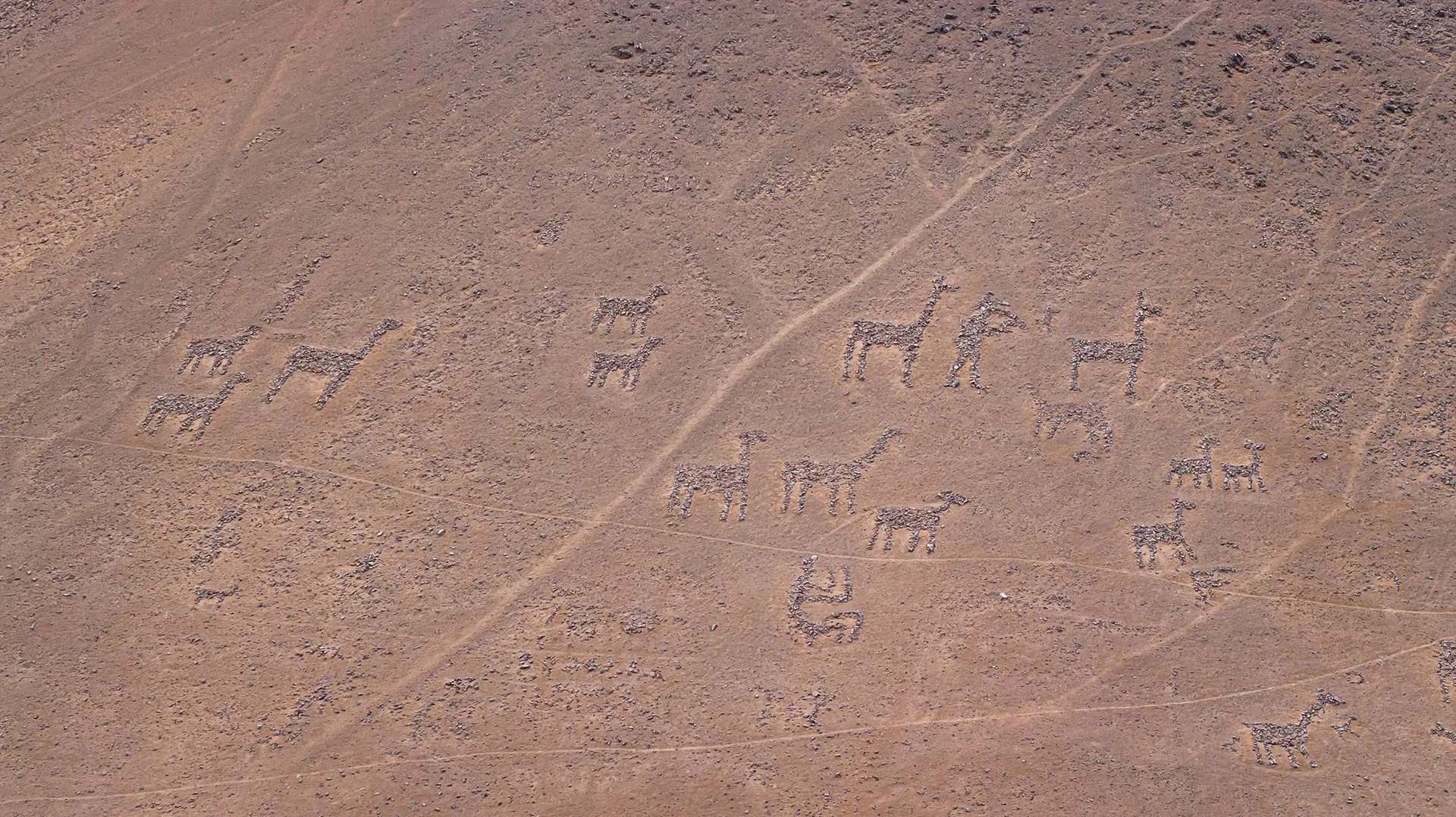
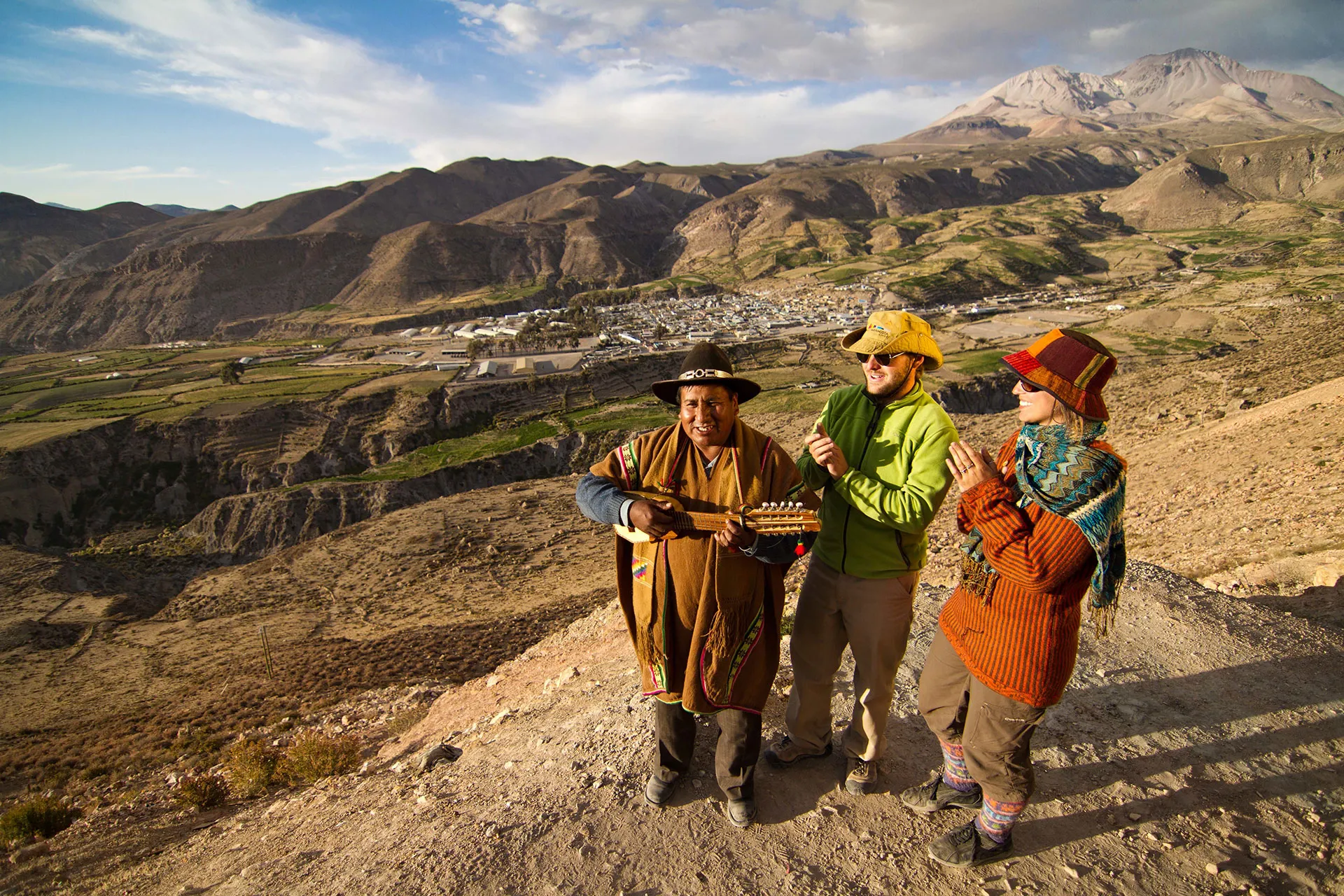
The tour starts with a visit to the Lluta Valley where you can admire large geoglyphs built on the hillsides and a variety of archaeological remains such as the Inca Colcas. This place is where the Quechua civilization stored agricultural products. Panels of petroglyphs are located 20 km from the valley and they are in surprisingly good condition. They show figures that simulate hunting, the presence of camelids, and astral figures. After a visit to the town of Poconchile, we will still at the Quebrada de Cardones: a place that seems to be taken from Old West movies thanks to the presence of the “candelabra cacti”, a true natural treasure that reveals the peculiarity of the ecosystem of this area. Through gentle walks, you can explore the Copaquilla Pukará and the Aymara town of Socoroma—a pre-Columbian origin locality where the Church of San Francisco was built after the Spanish occupation in 1560. Finally, you will arrive in Putre: a highland town located at 3,500 meters above sea level that combines indigenous, and colonial elements. This the ideal place to acclimatize to the altitude. At the end of the excursion you return to the hotel.
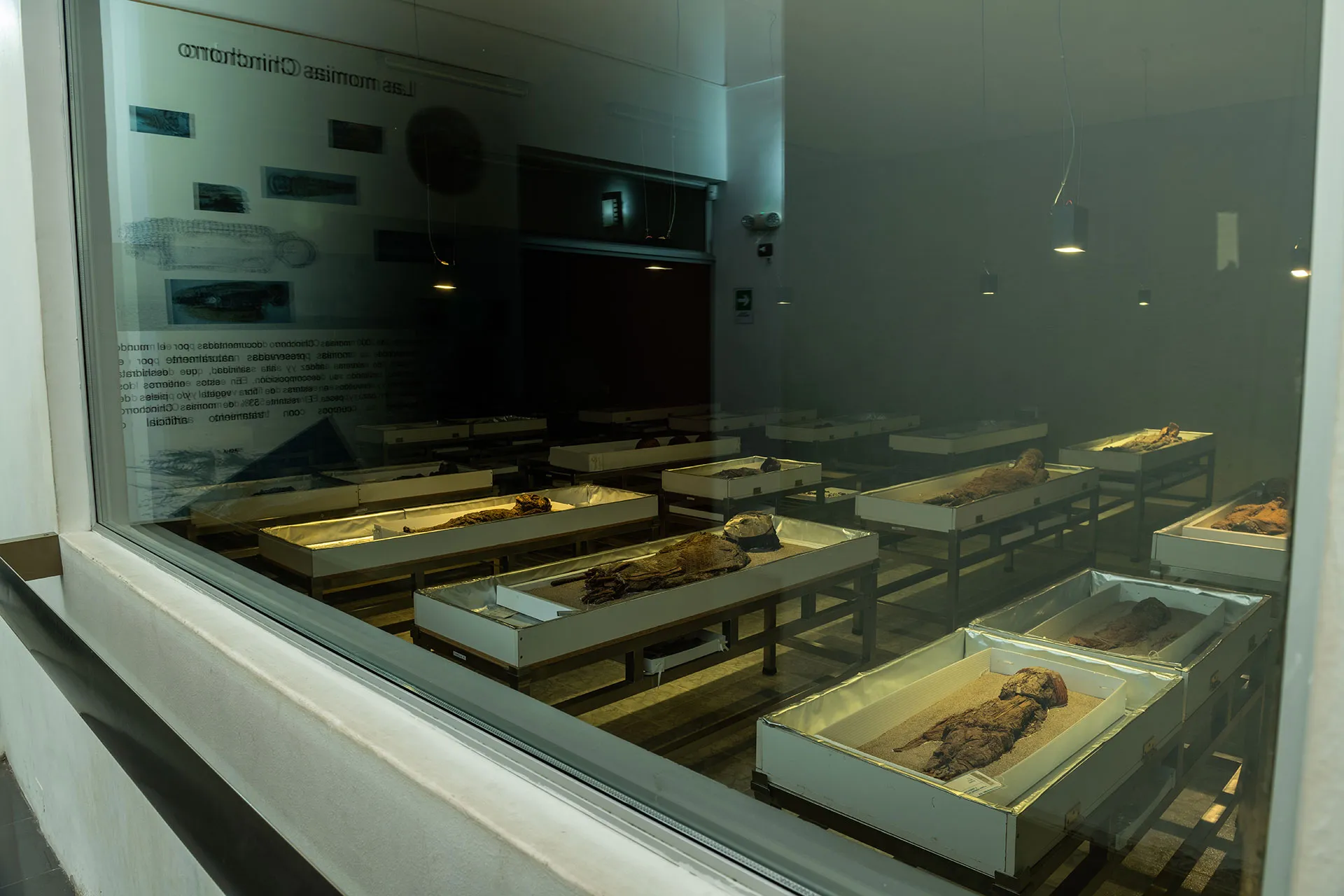
The tour begins by heading to the Azapa Valley. This journey will allow you to contemplate the geoglyphs of Atoca and Cerro Sagrado. This is a type of representation made of stones that can only be found in five countries in the world. We will stop on the southern bank of the San José River where the Pukará de San Lorenzo is located—a pre-Inca fortress dating back to the 12th century. The visit continues to the San Miguel Archaeological Museum of Azapa. This place exhibits important pieces of pottery, textiles, and utensils from original people. Though its main attraction is the Chinchorro Mummies, which are considered the oldest mummies in the world. Next on the list, it’s a walk through the town of San Miguel and its ancient cemetery—which is over 3,500 years old and still in use—is also part of this excursion which will pass through an old road in the Quebrada del Diablo that connects with Poconchile and flows into the Lluta Valley. This is another area rich in petroglyphs, colcas, and geoglyphs. At the end of the tour, we return to the hotel.
The first stop of this journey is the Lluta Valley: home to various ruins, and archaeological traces such as the Copaquilla Pukará. This latter is a fortress from the 12th century and it was declared as a National Monument. And the Inca Tambo of Zapahuira is a kind of Inca shelter or residence that testifies to the presence of this culture in Chile. After passing through the towns of Putre and Parinacota, the expedition will finish at Lauca National Park, which has been declared as a Biosphere Reserve by UNESCO. With more than 130 thousand hectares, this park is home to a great variety of highland flora and fauna, such as beautiful bofedales (native meadows with permanent humidity); imposing volcanoes like the “Payachatas” (the Parinacota, 6,330 meters, and the Pomerape, 6,240 meters, which are among the 35 highest volcanoes in the Andes), and breathtaking views of the Cotacotani Lagoons and the Chungará Lake—located at 4,570 meters above sea level—which has an ideal environment for recreational activities and for appreciating the beautiful contrasts of the landscape and its unique topography. Return to the hotel.
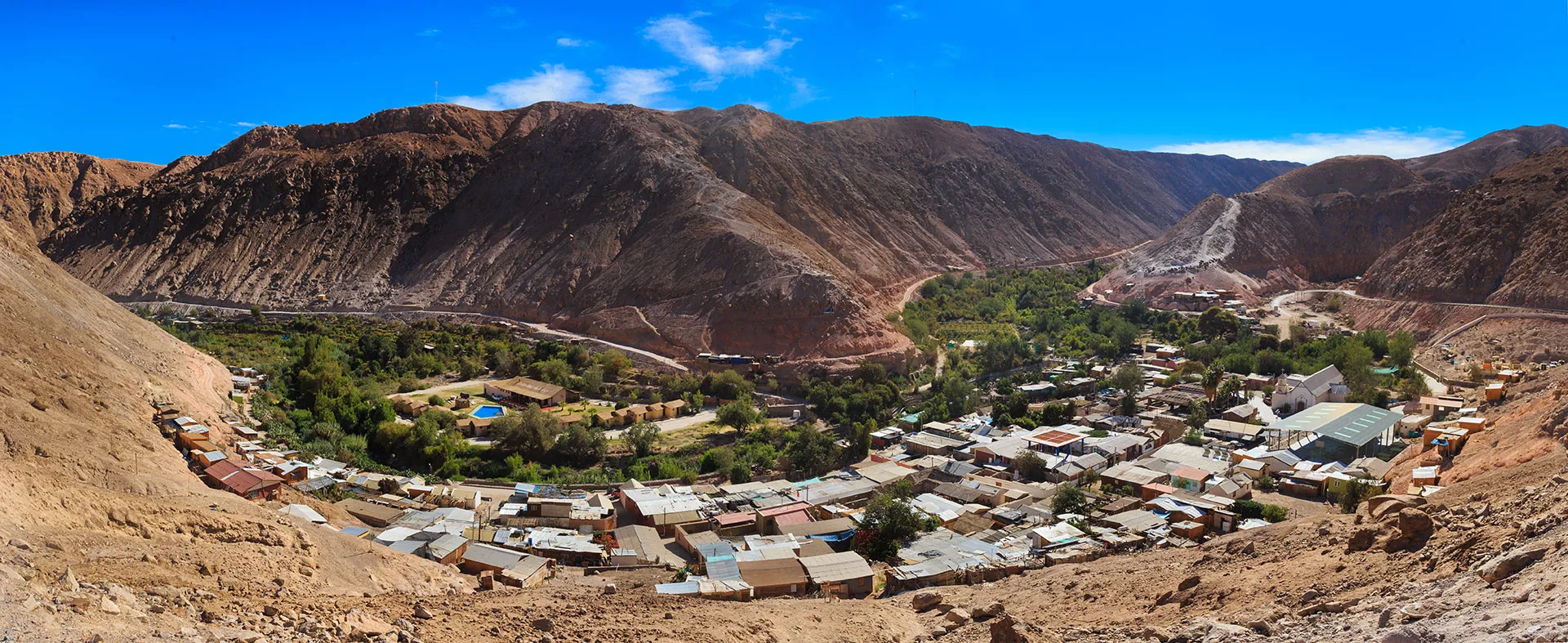
The tour begins by searching for a true “oasis in the middle of the desert.” This wonder is called Codpa, and it’s a beautiful warm-climate oasis village early occupied by ancient travelers. They left numerous petroglyphs of everyday life and mystical scenes, with Tiwanaku influence and advanced Incas. The San Martin de Tours Church (1668) is also here; a milestone in the evangelization of the natives of the pre-Andean region, which became the second oldest parish built by the Spanish in Chile. Andean-Christian syncretism is reflected in this church, contemplating a range of forms and religious rituals thanks to the introduction of Andean practices into Catholic ceremonies. It’s said that time has stopped here; an example of this it is that the vineyards and “lagares”—left by the Spanish conquerors—are still used for the production of “Pintatani” wine (highly coveted by the Viceroy of Peru and the nobles of Potosí). After a picnic in Codpa, the expedition continues with a visit to small villages such as Chitita, Guañacagua, and the petroglyphs of Ofrajía. After this last tour, return to Arica.
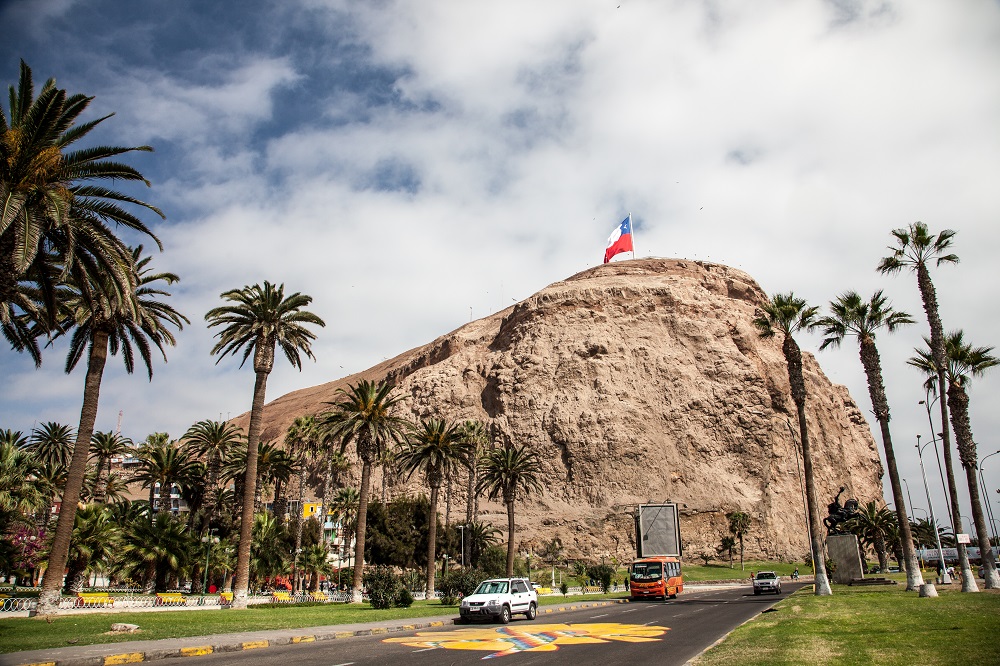
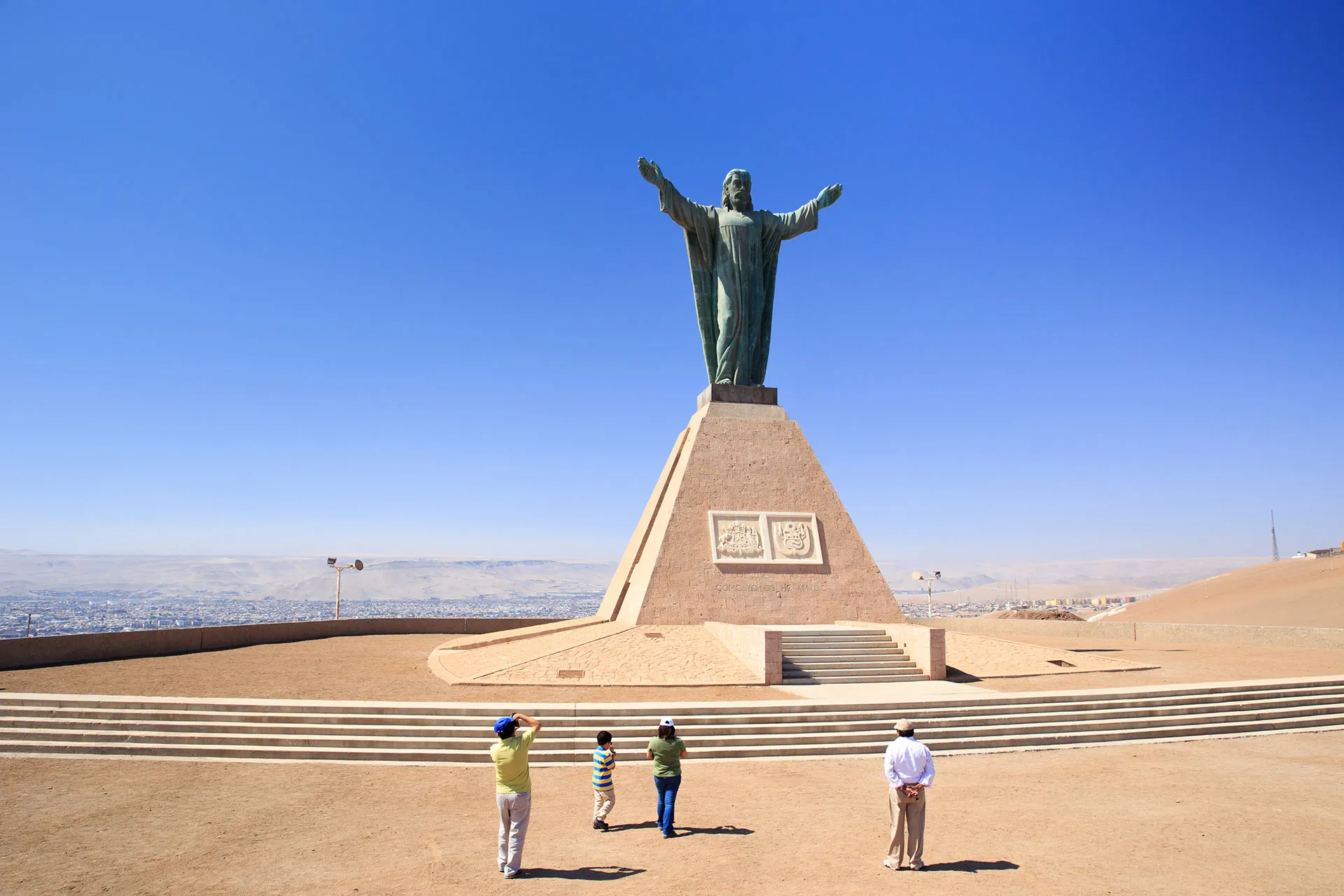
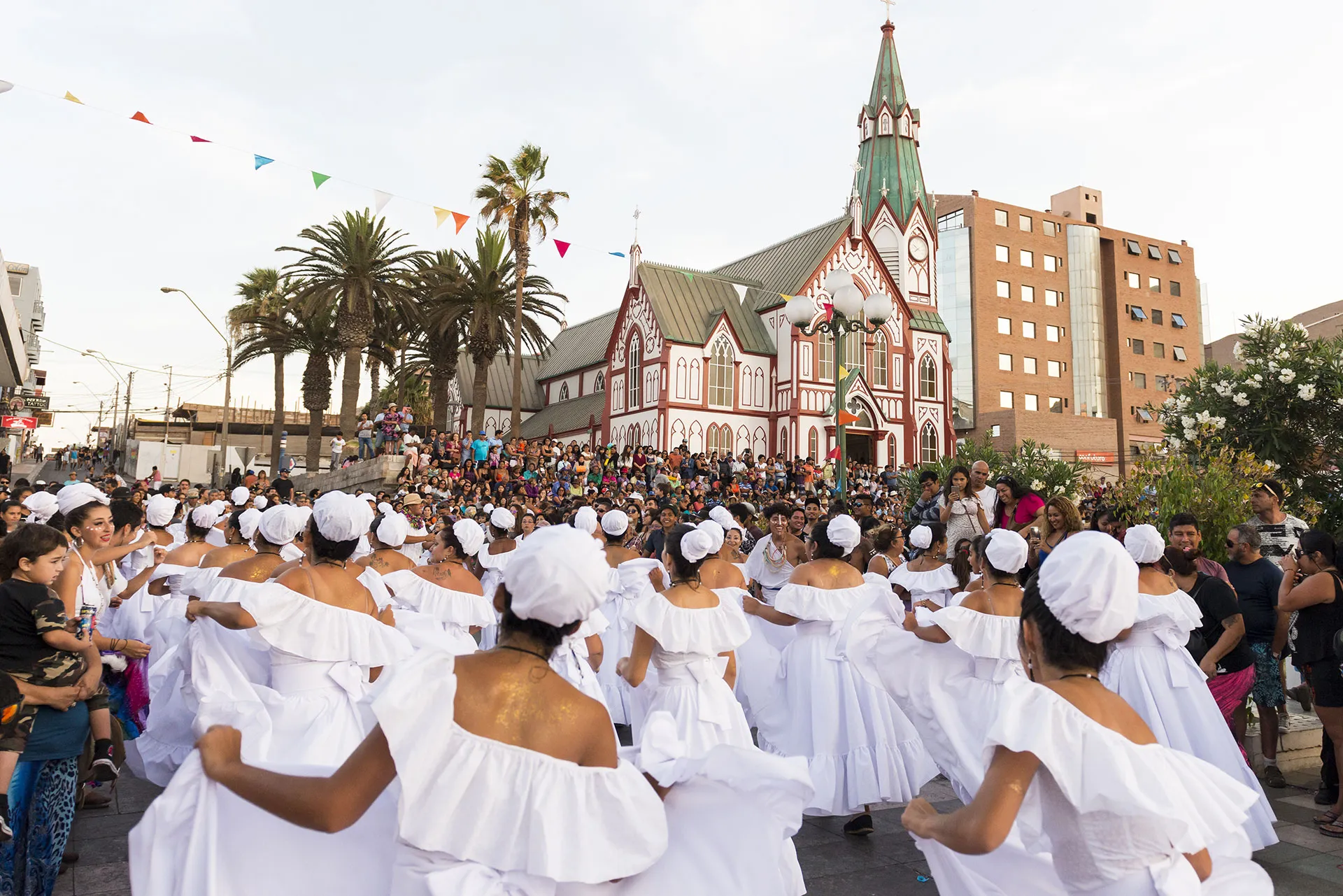
The tour begins by admiring the heritage and archaeological facet of the so-called “city of eternal spring”. Then, it’s followed by a visit to Plaza Colón, and two of the buildings that are part of Gustave Eiffel’s portfolio (the same as the Parisian tower): the San Marcos Cathedral and the Casa de la Cultura (former customs office). You will visit the “Morro de Arica”, a coastal hill 130 meters high that offers a panoramic view of the city, and symbolizes peace between Chile and Peru. The tour continues towards the Azapa Valley, the lands where an exquisite variety of olives are cultivated, and which houses archaeological traces of high universal value. In this place, you can contemplate the impressive geoglyphs (large rock figures built on the hillsides) and visit the San Miguel Archaeological Museum. In this last stop, it’s where the mummies of Cultura Chinchorro are found. These are valuable archaeological remains that correspond to the oldest mummification process in the world (2,000 years before the Egyptians), and belong to sacred rituals of a community of fishermen who inhabited Arica between 7,020 and 1,500 B.C. After visiting the museum, the return to the hotel begins.
© 2026 Chile Concept | Registered in Scotland SC211011